All posts by jpdv@webmail.co.za

About jpdv@webmail.co.za

I was born with Tetralogy of Fallot (TOF), it is 4 x defects of the heart, and had an operation to correct my heart, this was back in 1976. I went to the Kruger National Park (where you can see the big 5) and had to drink malaria prevention medication. My heart went out of rhythm. I then went through a period of anxiety/panic attacks, at the age of 23 and did not have much hope. I overcame the anxiety with the help of doctors, meds, lifestyle, prayer and a good attitude. Some of the stuff that helped me is mentioned here: www.myafibheart.com/afib-re... Since then I have had 8 cardioversions and one ablation. I write because I want to understand and prevent AFIB and anxiety/panic attacks.

Heart Arrhythmia Stroke Prevention, AF harmless?

Is AFIB Harmless?
Heart Arrhythmia Stroke Prevention is AFIB Harmless?

CAN ATRIAL FIBRILLATION KILL YOU? WHAT YOU MUST KNOW ABOUT HEART ARRHYTHMIA STROKE PREVENTION

The first time I experienced an AFIB attack, I thought that I was going to die of AFIB, but I knew nothing about heart arrhythmia stroke prevention or any of the side effects of Afib.

Afib has attacked me in different ways during the years. I must say that these episodes have become less violent/severe for me and for the past three years nearly absent. Everyone could experience an afib attack differently, the reasons why my episodes have changed during the past 20 years include:

1. Change in medicine that I have used

2. My level of fitness

3. My level of stress during the attack, or during that preceding week and month.

4. Food or alcohol that I consumed that day or the previous day.

5. The activity (sometimes sport) I was taking part in.

Mostly the attacks have been less severe because I have had an ablation and because of the drugs that I use now.

The main thing is that in the beginning the doctors did not really know how to treat me and the attacks were bad! I mean stuff like passing out and a heart rate going over 200 beats per minute.

HEART ARRHYTHMIA IS NOT THE END!

I remember one episode where I was at work and suddenly my heart just went crazy. I did not know very much about Afib then and I thought “this could be the end”. A co-worker rushed me to hospital in her car because they did not want to wait for the ambulance and (the scary thing for them) they could see my heart beating in my chest.

When experiencing this for the first time I can understand that you may think “how will I survive this thing”. It was here that I started my heart arrhythmia stroke prevention journey.

Fortunately, you can find courage in the fact that I have had AFIB for more than 20 years, and have lead a normal life , like many other afib sufferers.There have been good times and bad times, but the very good news is that AFIB itself will not kill you, but you must equip yourself with heart arrhythmia stroke prevention knowledge .

The bad news is that AFIB is not good for you and that it must not be left untreated. It is important to know more about heart arrhythmia stroke prevention. If AFIB is left untreated it can be very bad for your health and yes then it’s side effects can kill you.

The most serious risks from Afib are:

STROKE

HEART FAILURE

CHRONIC FATIGUE

ADDITIONAL HEART RHYTHM PROBLEMS

INCONSISTENT BLOOD SUPPLY

But the main and most serious problem is the risk of stroke.

In short a stroke is a brain attack, and happens when the blood supply to a part of your brain is cut off, according to STROKE.ORG .

This can happen if you have afib, because the upper chambers of your heart (atria) do not contract properly, they only quiver. Without proper contractions of the atria (two upper chambers of your heart) some blood may remain in them and pool.

If your blood gets the opportunity to pool it can clot.

If a blood clot formed in your atria (upper heart chambers) is pumped out of the heart into the brain it can block the blood supply to a part of the brain and cause a stroke according to  HEART.ORG.

Knowing this is one of the fundamentals of heart arrhythmia stroke prevention and management.

Atrial fibrillation can increase the risk of stroke by 5(five).

If you have afib, how can u prevent a stroke?

1. The best option is to try and cure the afib first.

2. Know what your CHADS-VAS score is:

C- Congestive Heart Failure

H- Hypertension

A- Age 75 and older

D- Diabetes Mellitus

S- Stroke, Tia or Te

V- Vascular Disease

A- Age 65 to74

S- Sex Category

Check your own score at: YOUR CHADSVASC SCORE, but do consult your own doctor or cardiologist because there may be some patient-specific considerations that must be taken into account.

3. Use anticoagulants, like warfarin, or new/novel oral anticoagulants (NOAC’s), like dabigatran(Pradaxa), apixaban and rivaroxaban as prescribed by your doctor to keep your INR at the right level.

The use of anticoagulants is one of the main pillars of heart arrhythmia stroke prevention.

There is an interesting study  that suggests that warfarin may not be the best choice for Asian  patients, and that they would rather benefit from using NOAC’s

The main difference between “old” anticoagulants like warfarin and the new oral anticoagulants (NOAC’s) is that you do not have to test your INR that regularly. Another difference is that the NOAC’s do not interact with other medicines and food that much.

Do remember that warfarin has been used for decades, and therefore, it is known what it can do and also what it’s side effects are. The NOAC’s are new kids on the block and all the side effects are not known yet.

Old and new anticoagulants are mentioned above, but for many reasons like:

  • The risk of bleeding
  • Trouble maintaining a normal INR
  • Certain foods that contain vitamin K that must be limited
  • Concerns about the cost of medication, and some other reasons

Anticoagulants may not be the best option for some people.

The good news is that anticoagulants do not have to be your alpha and omega because there are other procedures available to stop a stroke.

There is a small ear-shaped sac, in the muscle wall of the left atrium and it is called the left atrial appendage (LAA). If a patient is in atrial fibrillation the impulses are fast and chaotic, and that means that the atria (top chambers of the heart) cannot effectively squeeze the blood into the ventricles.

Blood that collects in this LAA can form clots. If these clots in the LAA is then pumped out of the heart they can cause a stroke, usually in the brain where it can be called a brain attack or, better known as a stroke.

With enough heart arrhythmia stroke prevention knowledge, a clot can be stopped from forming.

To stop this clot from forming your doctor may recommend a procedure to seal off your left atrial appendage (LAA). For more information go to Appendage Closure, or see list below:

A. The WATCHMAN Device. It is a parachute-shaped device and is self-expanding that closes off the LAA. It is implanted percutaneously (through the skin) in an electrophysiology (EP) lab. The procedure does not require surgery but general anesthesia may be used to do the procedure. A catheter sheath into a vein near the groin is used to get to the opening of the LAA. It the seals off the LAA. Usually used in patients with nonvalvular atrial fibrillation, and the patient must use warfarin for at least 45 days after implantation.
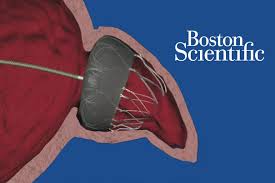
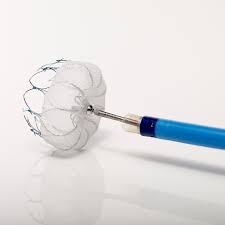
Watchman for AF
Watchman device for AFIB
Watchman device
Watchman device

B. The LARIAT procedure. With this procedure a device is used to lasso, or place a stitch loop around the left atrial appendage (LAA) so that it is closed off. Unlike the WATCHMAN you do not have to take warfarin after the LARIAT procedure. Watch a short video: LARIAT PROCEDURE

C. Surgical removal. This is usually done when other cardiac procedures are done like the maze procedure or mital valve surgery.

D. Amplatzer CardiacPlug. This device is inserted into the opening of the LAA. It seals off the left atrial appendage (LAA).

4. Stay fit by doing regular physical activities.

5. Enjoy a heart-healthy diet low in saturated and trans fats.

6. Keep high blood pressure under control. If you have high blood pressure, examine your lifestyle, speak to your doctor and do your best to control it.

7. Avoid excessive use of alcohol and caffeine. The term “holiday heart” reveres to your heart rhythm going out due to the excessive use of alcohol and binge drinking.

Drinking coffee is not the only way that you take in caffeine, although some research suggests that drinking coffee may not have such a big influence on triggering afib. Every person will differ in this case because I believe that types of coffee, frequency of drinking, and how you drink your coffee will differ very much.

For me the problem was using an energy drink with caffeine in it. I usually take very good care of what I drink, but in this case, I failed the test and was admitted to hospital two days later, with afib. I was on a 60km mountain bike training ride and drank an energy drink of someone else, because I did not have my own that day. So please read the labels on energy drinks or supplements.

Be very aware of any stimulants that you take because they usually increase your heart rate and have many other side effects. Nearly all asthma medications have stimulants in them, and some, pain killers, cough medicines and other medicines also. Nicotine is also a stimulant.

8. Do not smoke, it is bad for everyone – enough said.

9. Control your cholesterol.

10. Control your weight.

11. Control your blood sugar.

Heart arrhythmia stroke prevention knowledge can save your life.

Many if not most of the above-mentioned factors can be controlled. Because many of these factors and actions are easy to control we tend not to do them. In The Slight Edge, Jeff Olson talks about the effectiveness of mastering the mundane. This may mean using only one sugar and not two, exercising every day and not just once a week, choosing broccoli over chips, water over alcohol/coffee, and many other daily choices and then keeping yourself accountable.

Read more about this at MY RESOURCE PAGE

One of the best ways that I control most of these factors is by keeping, enjoying and controlling my mornings, and to put myself on the right track every day, I go thru the following routine every (or nearly) every morning in the following order.

My Morning Start-Up for Health:

1. Drink a glass of water

2. Pray

3. Exercise, nearly always a few sit-ups and maybe pushups, usually not longer than 15 minutes. Sometimes when I’m not motivated I only do a few stretches.

4. Eat breakfast, at the moment, it is muesli, yoghurt, honey and cinnamon.

5. Read my bible, first good news, then nr 6 the bad/newspaper.

6. Read newspaper

7. Drink coffee, but I want to move more to Rooibos tea (I WANT TO DO A FULL BLOGPOST ABOUT THIS WONDERFULL CAFFEIN FREE TEA IN THE NEAR FUTURE, BUT GET SOME NOW THROUGH MY RESOURCE PAGE).

8. Shower, and then off to work.

Many successful people use a morning routine to start the day right, and Hal Elrod wrote a wonderful book about how to master it.

You can read more about how to create a Miracle Morning, by Hal Elrod at my Afib Resource page.

But to get back to the main point, of surviving afib, and that is that stroke is the biggest problem. It is not the only possible complication that can develop out of afib but it is the main risk. The big concern is that stroke is an attack!, an attack of the brain. It is sudden and can be deadly.

Take note of heart arrhythmia stroke prevention, as well as the warning signs and symptoms of stroke. The easiest way to remember the signs is by using the F.A.S.T method as demonstrated on the Strokeassociation.org website at: STROKE WARNING SIGNS

In short STROKE WARNING SIGNS are:

F – Face drooping: Is one side of the face drooping or numb. Is the person’s smile uneven?

A – Arm weakness: Weakness or numbness in one arm. Ask the person to raise his/her arms. Is one arm drifting forward?

S – Speech difficulty: Is the person’s speech slurred? Is it hard to understand the person or is he/she unable to speak? Can the person repeat a simple sentence like “The sky is blue”

T– Time to call an emergency number, in the USA 9-1-1, Europe 112, UK and other countries 999: Call an emergency number if someone shows any of these symptoms even if the symptoms go away. Get the person to the hospital immediately, and check the time the first symptoms appeared, because it can help the doctors in the treatment procedure.

So afib may not kill you but what you don’t know about afib (blood clots and stroke) can kill you. Get enough heart arrhythmia stroke prevention facts so that you can protect yourself.
Cape Town Cycle Tour Results

Cape Town Cycle Tour
Cape Town Cycle Tour Results

CAPE TOWN CYCLE TOUR RESULTS 2016

Like always Cape Town was wonderful during the Cycle Tour. Everything worked out well and I had a wonderful ride. This was my best race time ever!

Cape Town is really a beautiful town and an amazing place to stage a race like the Cycle tour.

Cape Town
Blouberg: a piece of Cape Town at dusk

AFIB THOUGHTS

I live a perfectly normal life and usually do not think of my AFIB that much. When something big comes along like the Cape Town Cycle Tour, which is 109km (about 67miles) I must say that I tend to think a bit more about my heart and how it will react to four hours of cycling. When I think about my training, I usually think it was not enough. This year, the longest ride that I did was 80km on a flat course, but I did train regularly.

I don’t know about other afibbers but I sometimes “feel” my heart. What I mean is that I do not feel my heart all the time but now and then I get that sensation that my heart is skipping a beat,  just beating irregularly or “hard”. This worries me sometimes!

Through my own research, I have made the following conclusions, of what it may be.

  1. Paroxysmal Atrial Fibrillation (Afib that occurs and then stops by itself)
  2. Stress
  3. A full stomach
  4. Ectopic Heart beats, read more about it at: Ectopic heartbeats, PVC and PAC’s

Before the Argus cycle race, I do tend to think about those times that my heart reacts strange, but I must say that during most of my races and training rides my heart beats in rhythm. Sometimes I only get a few strange beats in the beginning of the ride. I put that down to nerves and my heart “changing gears” to get the first few pedal strokes going.

2016 ARGUS
2016 CAPE TOWN CYCLE TOUR EXPO

Like I said this was my best ride ever and I did a time of 03:53:07, of which I am very proud of. I know I can do better, and maybe next year my time will even be better.


MY AFIB CAPE TOWN CYCLE TOUR

My afib Cape Town Cycle Tour
Cape Town Cycle Tour

THE CAPE TOWN CYCLE TOUR

This will be my 6th Cape Town Cycle Tour. Will I beat my best time of 04:09:01 in 2014, and does my 2,5mg Bisoprolol taking AFIB heart slow me down?

Last year I did not take part in the short “fire” race, but this year I am ready to take on the 109km. I’m very happy and blessed to have received an entry for the Cape Town Cycle Tour of 2016, after the announcement of the new entry procedure.

Does anyone have enough time to train? It was the same this year, I felt that I just did not train enough.

With work, children, work again, blog/website, other meetings, school meetings, work again, some squash games, chores around the house, driving children to all sorts of activities, it was difficult to do more than an hour and a half every second day. Many days I missed my bike, and in January, I missed a whole week.

So for January, I did 452km and February 420km. About 90% of that was on a mountain bike in the Free State. OK! and I know the lack of mountains in the Free State are obvious, but what can I do, I live here.

This year I’m going for a sub 04:00:00, and that means anything quicker than four hours will work for me. Are there people only working four hours per week? Yes! I have read the Tim Ferriss Four Hour Work Week book, and I hope to achieve it one day.

Sorry for that, just got sidetracked by that four- hour target. My best time of 04:09:01 timed by Racetec in 2014 was so so close, but yet so far.

Many of my Mountain Bike buddies have done the Cape Town Cycle Tour under 4 hours, and some sub 3:30 with their mountain bikes! Yes I hope you feel sorry for me because sometimes I ride with them and they only go on and on, on those bikes of them. I have done the last 3 Cape Town Cycle Tour races on an old Raleigh RC3000.

My plan is to use the Raleigh the last time this year, break the four hours and then do a nice slow site seeing tour next year on my mountain bike. The Cape Town Cycle Tour is the largest timed cycle race in the world, about 35 000 people take part in it every year. I think it is the most beautiful race, but I cannot say in the world because I have not done any race outside of South Africa yet. Below is a photo taken in 2011 from Table Mountain in Cape Town during the Cape Town Cycle Tour weekend.

Cape Town Table Mountain

Does my Bisoprolol and enlarged right atrium make me slower? I do not know because the larger atrium has been there for, I believe from my birth, and I have been using Bisoprolol for many years. I have read that a side effect can be lassitude, but it is difficult for me to say because I have been using it so long. Truth be told, after about 100km on my bike I do get a bit lazy to push those pedals down.

Actually, I do not care that much if it slows me down because I’m just happy to be AFIB free for the past two plus years and able to do things like the beautiful “Argus” as it is known by most of the “old” Cape Town Cycle Tour cyclist.


HEART PALPITATIONS PANIC ATTACKS

Heart Palpitations Panic Attacks

MY HEART PALPITATIONS PANIC ATTACKS

I have had heart problems from birth, but AFIB was only diagnosed when I
was about 23 years of age. It was a big shock.

I was told that I had a heart arrhythmia called AFIB.

I thought the surgery on my Tetralogy of Fallot heart sorted everything
out, but it was only the start of my heart palpitations panic attacks story.
I  got married when I was 24.

I did not know much about AFIB, it felt like the doctors were also still “looking to see what’s my problem”, I was confused, young, scared, afraid of dying and …..

I could feel my heart beating….irregularly and out of rhythm.

I thought ” would I ever see my children” and ” will I be too weak to play with them” so yes, it was a big shock.

I have also experienced and read on forums that doctors sometimes do
not take afib seriously and you are sent home with a “don’t worry, it won’t
kill you”, but the problem is you can FEEL your heart.

HERE COMES THE PANIC ATTACKS!!

Continue reading HEART PALPITATIONS PANIC ATTACKS

Heart Arrhythmia Problem

Heart Arrhythmia Problems

HEART ARRHYTHMIA PROBLEM

HEART ARRHYTHMIA PROBLEM.

It’s all in your head this heart arrhythmia problem.

Maybe you have heard this before. This heart arrhythmia problem thing is just in your head, get over it. Well, the thing is you cannot just get over it because it’s not in your head it is in your heart, because that is where a heart arrhythmia problem is.I read an interesting blog from Danielle Urquhart who has Inappropriate Sinus Tachycardia (IST) and her “8 Important things every IST sufferer wants you to know.” And it got me thinking about how other people saw my Afib, and seemingly normal life (OK I feel that I do have a normal life, even better than normal – I’m blessed).

For me, one of the big problems is that nobody can see your “problem” and this caused me to think that I am overreacting. I have had different types of Afib attacks during the years. This included episodes where it felt as if I am going to die, because my heart was beating so fast, it felt that it would run off for good, never to return to a normal sinus rhythm. Continue reading Heart Arrhythmia Problem

ATRIAL FIBRILLATION: INFO GRAPHIC: FACTS ON AFIB

ATRIAL FIBRILLATION:

INFOGRAPHIC.

I have made an infographic on Atrial Fibrillation to show just how big deal Afib is in the world. This is good and bad news:

Bad news, because many people are suffering from A-fib (and may not even know it, maybe I will do an infographic on the Myths about afib later) also this “thing” is affecting more and more people. All of us afibbers know how big shock it is to you and your family when AF strikes.

Good news, because it means there will be more research into this phenomenon, there will be more understanding of what Afib is, how it affects people, how best to treat it and ultimately more support and new cures.

I hope you find this infographic helpful/interesting or maybe shocking, and please give me some feedback about what you think.

Atrial Fibrillation: Infographic: Interesting facts.

Atrial Fibrillation
Atrial Fibrillation


Cardiologist visit – what happened


CARDIOLOGIST VISIT

A week ago I visited my cardiologist Dr Stephen Brown at Universitas Hospital in Bloemfontein, South Africa. I have two cardiologists – Dr Rosher monitors the rhythm of my heart and Dr Stephen Brown that monitors the physiological aspects of my heart. The reason why I make it a point to visit him or my other cardiologist at least once a year is twofold. The first reason is I want to make sure that my heart is still in sinus rhythm. It did happen to me previously (long ago with a visit to Dr Jordaan), my previous cardiologist, that I was out of rhythm, and his first words were “you’re heart is out of rhythm”. It came as a shock because I felt great and had no symptoms of AF. The thing was that my heart rate was kept down/slow by medication, and that made the symptoms of AF less obvious to me, but my heart was still out of sinus rhythm. So then I got the second shock, the cardioversion shock, and that put my heart back into sinus rhythm.

Being out of sinus rhythm was actually very dangerous because untreated all of us know that AF can cause a stroke or other problems like changing the “structure” of the heart. Continue reading Cardiologist visit – what happened

AFIB: KEYS TO PREVENTION

KEYS TO AFIB PREVENTIONWHAT CAN I DO TO REDUCE MY RISK OF AFIB?


With some people, afib appears to be a mystery, but afib can be prevented in many cases.

STAY FIT! Physical activity on a regular basis is super important, not just for afib.

EAT THE RIGHT HEART-FOOD! Low in saturated fats, cholesterol and trans fats.

HIGH BLOOD PRESSURE, Must be managed.

DO NOT! Use excessive amounts of alcohol! -Binge drinking is out.

CAFFEINE, Manage your intake. Energy drinks with caffeine can be a problem for afib hearts.

WHY SMOKE? It’s bad for your heart.

CHECK YOUR WEIGHT. Your heart works harder when your are overweight.

Conditions that may need treatment.

Sleep apnea

Thyroid disease

Diabetes

Chronic lung disease

Other heart conditions. That is my thing – Tetralogy of Fallot(TOF).

Family history.

Probably the biggest risk with Afib is the possibility of a STROKE.

Continue reading AFIB: KEYS TO PREVENTION

Best Exercise for Afib

What’s good for your AF heart

My experience is that some types of exercise are more likely to put my heart in afib.

A few years ago I only played squash (racketball), and my doctor suggested that I rather do some swimming or cycling. Well, I did not use that advice immediately and kept on playing squash, but I did think about his comments. Slowly I started running a few km’s every now and then but kept on playing squash because I loved it and did not enjoy the running that much. Also, the running was though!!,  and I did not do anything more than 5k’s. Continue reading Best Exercise for Afib

My a-fib blog. 5 reasons.

A-fib progression

I’m only 44 and want to do a lot of things. This AF heart of mine has definitely showed me that life is short. My doctors have said different things at different stages of my heart story. I know that age, type of exercise, diet, stress, medication and operations will all have an impact on the progression or lack of it in afib and I want to try and measure and catalogue it. At afib.newlifeoutlook.com research shows that progression is typically fast in the first year after diagnosis.

The  afib progression scoring system HATCH can be used to predict what can happen with your AF heart in the future, and I want to understand that.

Continue reading My a-fib blog. 5 reasons.

About my heart and head

My Heart

I also have a “stubborn” heart that does not always beat the beat…..

I have lived with afib (atrial fibrillation) for a big part of my life. My first episode was when I was 24 but that actually is not the beginning of my heart story.
I want to share what I have seen, heard, felt, experienced, done, learned and also believe about afib and what it did to me and how it influenced and still influence’s me.
I know my story can help U. Continue reading About my heart and head